 Vitlog

A useful meal plan has to work on an ordinary day. It needs to fit the time you have, the food you enjoy, the equipment in your kitchen, and the amount you can comfortably spend. A perfectly arranged photograph is less useful than a lunch you can prepare when the refrigerator looks nearly empty. Building a balanced plate is a way to organize those everyday decisions without turning every meal into a calculation.
This guide explains a visual starting point and then concentrates on the practical work around it: shopping, preparing familiar ingredients, adapting mixed dishes, handling busy days, and keeping useful notes. The examples are planning ideas, not a personalized diabetes diet or a weight-loss prescription. If you have a prescribed eating plan, food allergies, kidney disease, pregnancy-related needs, or another medical condition, use that plan and ask your clinician or registered dietitian how these ideas apply.
1. Use a visual starting point, not a rigid food rule
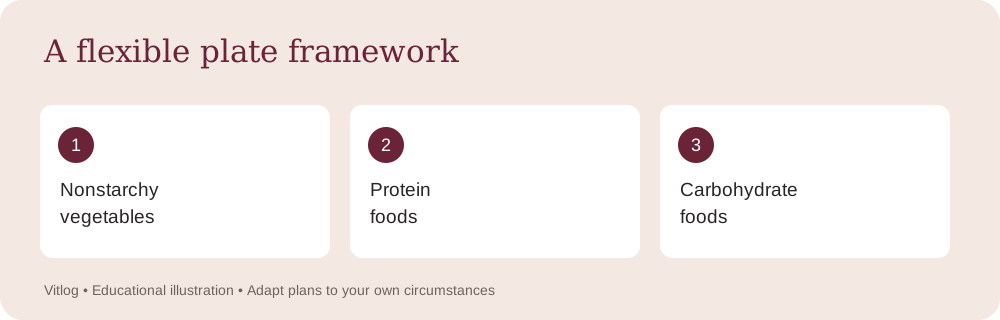
The CDC describes a plate approach that puts nonstarchy vegetables on about half a plate, a lean protein food on one quarter, and carbohydrate foods on the remaining quarter. Water or an unsweetened drink can accompany the meal. The method is a general planning tool; individual needs still determine amounts and choices. [1]
In practice, think of the plate as a reminder to notice what a meal contains. If your usual lunch is mainly rice, you might ask whether a vegetable dish and a protein source could fit alongside it. If dinner is a large salad, you might check whether it contains something more substantial than leaves and dressing. The goal is an organized meal, rather than a plate that passes a visual inspection.
You can apply the idea to a lunch box, a bowl, or several small dishes. There is no need to buy a divided plate or replace your family’s usual tableware. The important step is identifying the different parts of the meal before serving it.
2. Start with vegetables you will actually use
A shopping list becomes more useful when it names ingredients with a clear destination. Instead of writing only “vegetables,” write “carrots for lunch boxes,” “frozen green beans for quick dinners,” or “cabbage for two stir-fries.” This connects the purchase to a real meal and makes it easier to recognize what to prepare first.
Choose a manageable combination rather than a different ingredient for every day. One vegetable can appear in several dishes: cabbage in a cooked side, shredded into a wrap, or added to a soup. Buying familiar foods can reduce the pressure to learn a new recipe while you are also trying to organize your eating routine.
Fresh produce is one option, not a requirement. Frozen and canned choices may fit your storage, transport, or cooking arrangements better. Check the label and preparation instructions, and compare the versions available to you. If a fresh ingredient repeatedly goes unused, choose a form that better matches your week instead of treating the waste as a personal failure.
3. Give the protein component a clear place
When planning a meal, name its protein component as deliberately as you name the rice, bread, or noodles. Possible ingredients include tofu, lentils, beans, eggs, fish, poultry, or other foods that fit your preferences and dietary needs. Vegetarian meals do not need to imitate a meat-based menu to be thoughtfully planned.
For a practical example, imagine a lunch of roasted vegetables and rice. You could add a familiar bean dish or tofu prepared with a seasoning you enjoy. The planning question is whether the ingredient is available and convenient enough to prepare, not whether it looks fashionable in a recipe photograph.
Some ingredients belong to more than one nutritional category. Beans and lentils contain both carbohydrate and protein, so a simple visual division will not answer every question about a medically prescribed meal plan. If you count carbohydrate or follow another specific method, ask your dietitian how to account for the foods you use. A website illustration cannot replace that individual explanation.
4. Keep carbohydrate foods in context
Carbohydrate is not limited to desserts. Grains, some vegetables, fruit, milk, yogurt, and legumes can all contribute it. The type, amount, and combination of foods matter when planning meals, especially when you already follow diabetes guidance. A clinician or dietitian can help determine an approach suited to you. [1][2]
For everyday organization, start by identifying the main carbohydrate ingredients in a familiar meal. A wrap may contain bread, beans, and a side of fruit. A soup may include potatoes and lentils. Recognizing those components is more useful than assuming a dish contains little carbohydrate because it is homemade or described as “natural.”
There is no need to remove every familiar starch from your kitchen to make the plate idea useful. You might begin with one meal and consider how the other components can accompany it. If you have been given portion guidance, apply that guidance rather than copying the size of a meal in an online photograph.
5. Make room for culture, enjoyment, and mixed dishes
Many meals are served as curries, stews, pasta dishes, casseroles, or filled breads. The ingredients do not need to remain in separate piles. Before cooking, list the main components and consider whether anything is missing from the meal as a whole. A vegetable side or another accompaniment may be easier than redesigning the entire recipe.
For example, a family pot of lentil stew might be served with rice and a cooked vegetable. Another household might make a noodle bowl with vegetables and tofu. A third might use a sandwich with a vegetable side. These examples describe ways of organizing a meal; they do not imply that the same portions suit every person.
Keep seasonings, texture, and familiar cooking methods in the conversation. A plan that ignores what you enjoy can be difficult to return to. Write down which versions your household likes, which ingredients are affordable locally, and which dishes are practical on workdays. Those observations make the next planning session more specific.
6. Build a shopping list around a few meal combinations
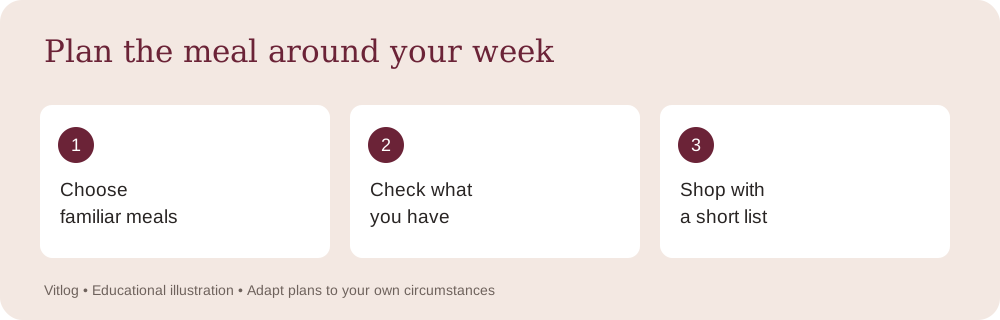
Start with three or four meal combinations rather than a full week of unique recipes. Each combination should name a vegetable component, a protein component, and a carbohydrate component where appropriate. Then look for ingredients that can be shared across those meals.
An illustrative list might connect rice to two dinners, a bag of frozen vegetables to several quick meals, and beans to a lunch bowl and a soup. A second list could use bread, eggs or tofu, salad ingredients, and fruit. Neither is a prescribed menu. The purpose is to make it clear why an ingredient is on the list.
Before shopping, check cupboards and the refrigerator. Note what needs to be used soon, what can wait, and what you already have in adequate quantities. A small list based on actual meals is often easier to carry out than an ambitious collection of unrelated ingredients. Leave room for changes in appetite, schedule, and household plans.
7. Read labels to answer a specific question
Food labels are easier to use when you know what you are comparing. You might be checking the serving size, the carbohydrate information needed for your existing plan, or the ingredients relevant to an allergy. Trying to rank every number at once can make a simple shopping decision unnecessarily confusing.
Compare similar products and make sure the amounts on the labels refer to comparable servings. The portion you choose and the manufacturer’s listed serving are not necessarily the same. Keep that distinction in mind if you are using a label to record what you ate. [1]
Avoid treating a single front-of-package phrase as a complete description of the food. Instead, look at the information relevant to your needs. If label reading feels difficult, bring the actual package or a clear photograph to a dietitian appointment. A question about the cereal you buy each week is often more actionable than asking whether all packaged foods are “good” or “bad.”
8. Prepare components instead of preparing everything
Meal preparation does not have to mean cooking every meal in advance. You could wash a few vegetables, prepare one familiar dish, portion a useful ingredient, or write down which meal will use leftovers. Choose the task that removes a real obstacle from the next day.
For someone with limited evening time, that task might be setting out the ingredients for a simple dinner. For someone taking lunch to work, it might be checking that a suitable container is clean and ready. For another household, it could mean agreeing who will cook on the busiest day.
Keep food safety separate from convenience. Follow storage and reheating guidance for the foods you prepare, and use suitable refrigeration and containers. If your working day does not provide safe storage, plan around that limitation rather than leaving perishable food out. A practical meal plan includes the conditions in which the food will actually be kept and eaten.
9. Create a realistic option for busy or low-energy days
A fallback meal is a planned alternative, not a failed version of a more elaborate dinner. Write down two or three combinations you can make with familiar ingredients and minimal decisions. They might use frozen vegetables, a convenient protein food, and a staple already in the cupboard.
The exact combination depends on your kitchen and dietary needs. A microwave, a kettle, and a shared refrigerator lead to different choices from a fully equipped kitchen. Plan for the equipment you have today, rather than postponing all organization until your circumstances improve.
You can also keep a short list of nearby places where you know the menu. When buying a prepared meal, look for an option that fits the guidance you already follow. If available, ask about ingredients or choose an accompaniment that completes the meal for you. The purpose is to reduce last-minute uncertainty, not to promise that every restaurant choice can match a homemade example.
10. Keep snacks and drinks in the planning conversation
Meals are only part of the day. If snacks and drinks are a regular part of your routine, include them when discussing your eating pattern with a professional. A food record that lists dinner but leaves out everything between meals can be difficult to interpret.
For your own planning, note which situations lead you to want something convenient: a long commute, an afternoon break, or a delayed evening meal. Then decide what is practical to have available. You do not need to label the situation as a lack of discipline before finding a workable option.
Drink choices also deserve an intentional decision. The NIDDK includes water and drinks with little or no added sugar among its general healthy-living suggestions. [2] If you have fluid restrictions or other medical instructions, follow those instead of a generic hydration message. Vitlog does not calculate a personal fluid allowance or recommend changes to a prescribed eating schedule.
11. Use a journal to record context, not to grade yourself
A brief personal note can capture something useful about a meal without turning food into a daily score. You might write that a prepared lunch was convenient, that a recipe took longer than expected, or that you wanted a different texture. These notes concern your experience and your planning process.
If you already record blood sugar under professional guidance, keep the measurement context separate from your opinion of the meal. A reading and a food note do not prove that one ingredient caused a particular result. Your clinician can help interpret repeated observations in the context of your overall care.
In Vitlog, use the personal-notes field for a short description and save the relevant measurements only if you choose to track them. Do not upload identifying information about other people. Before an appointment, select the entries that relate to your question instead of assuming every detail needs to be discussed at once.
12. Review the plan when real life changes
A meal routine may need to change when your working hours, household budget, appetite, or cooking arrangements change. Review the practical details before deciding that the entire approach has stopped working. Perhaps the ingredient was inconvenient, the portion was different from what you expected, or the recipe simply did not suit your household.
Choose one adjustment you can describe clearly. You might replace an unused ingredient, repeat a meal that worked well, or prepare lunch on a different evening. Keep a note of the change so that you do not have to rely entirely on memory next week.
If the difficulty involves symptoms, unexpected weight changes, food insecurity, or trouble following a medically prescribed plan, bring that concern to a qualified professional. Practical planning and medical assessment serve different purposes. A longer shopping list cannot solve a problem that needs individual support, and asking for assistance is part of making a realistic plan.
A simple planning exercise for the coming week
Choose one meal you eat regularly and write its usual ingredients. Identify what you would like to keep, what you would like to add, and what makes preparation difficult. Then create one version that fits an ordinary day and one simpler fallback version. Check whether both versions fit any guidance your clinician has given you.
Use the list when you next shop. After preparing the meal, write one sentence about what worked and one about what you would change. You have now created information that is specific to your own routine. There is no need to redesign breakfast, lunch, and dinner simultaneously to make that exercise worthwhile.
Keep a short kitchen reference
A small reference list can make later planning easier. Write down the meals your household already knows how to prepare, the ingredients that usually remain available, and any equipment limitations. Add one note when you find a combination that works well. Keep this list separate from medical instructions so that practical preferences are not mistaken for a prescribed eating plan. When a routine changes, update the list rather than relying on an old shopping habit. The document does not need to be attractive or comprehensive; its value is that it reflects your actual kitchen and can be used when you are making a quick decision.
Frequently asked questions
Does every meal need to look like the diagram?
No. The diagram is a visual planning tool. Mixed dishes and meals served in several bowls can still be considered by their ingredients. Individual eating plans may use a different structure, so ask your dietitian how the method fits your needs.
Can I use the approach for vegetarian meals?
Yes, the examples can include foods such as tofu, beans, and lentils. Some ingredients contribute to more than one category. If you use carbohydrate counting or another prescribed method, ask how those ingredients should be recorded in your own plan.
Should I copy the food amounts in the photographs?
No. Photographs illustrate ingredients and organization, not personal portion recommendations. Your needs depend on factors this article cannot assess. Use the amounts recommended in your existing plan or discuss the question with a qualified professional.
Can the journal tell me which food caused a reading?
No. Vitlog stores the information you enter and displays your records. It does not identify causes, diagnose conditions, or recommend treatment changes. Bring questions about readings and food patterns to your care team.
Sources and editorial note
[1] CDC, Diabetes Meal Planning: https://www.cdc.gov/diabetes/healthy-eating/diabetes-meal-planning.html
[2] NIDDK, Healthy Living with Diabetes: https://www.niddk.nih.gov/health-information/diabetes/overview/healthy-living-with-diabetes
The shopping exercises, meal-organization examples, and journal prompts are original editorial suggestions. Source links support the limited general nutrition background; they do not constitute endorsement of Vitlog. This article provides general information, not medical advice.